Plumbing Problems on Well and Septic Homes in Frederick County
Well and septic homes have two systems that the city handles elsewhere. Know which part is yours, who may repair it and what the county requires.
- Frederick-specific facts
- Steps you can take
- When to call a plumber
The Short Answer
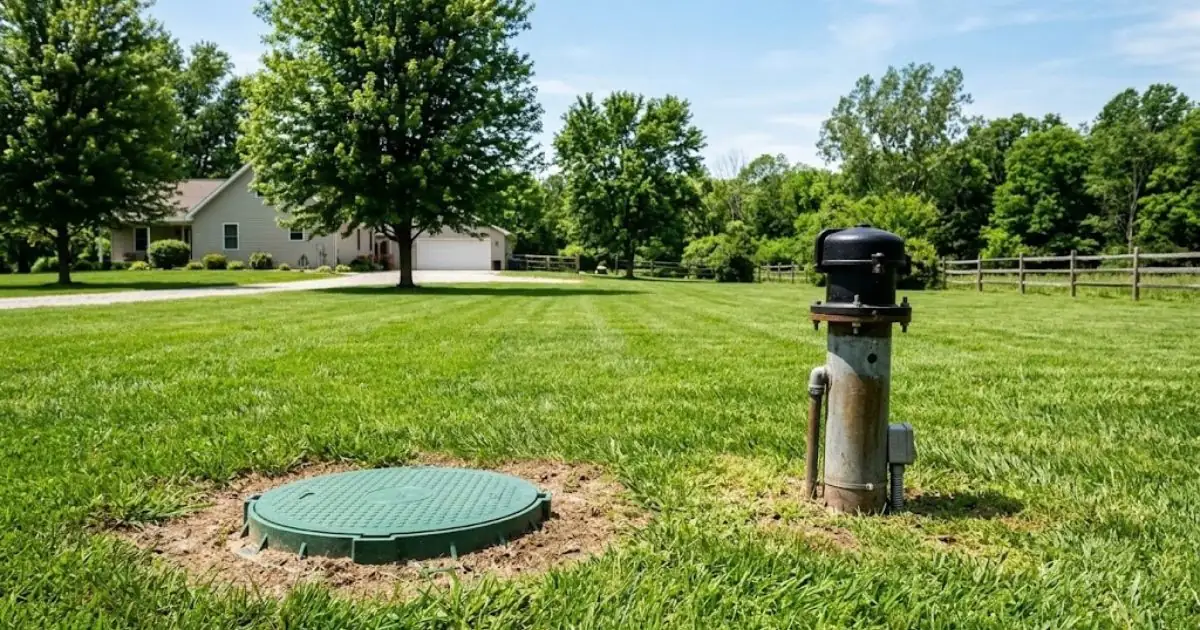
A home on a private well and a septic system is its own water utility and its own sewer plant. The pump, the pressure tank, the water treatment, the septic tank and the drain field are all the owner's to maintain. The most common problems are a failed well pump or pressure tank, hard or iron-rich water, a full septic tank and a failing drain field.
In Frederick County, the health department's Well and Septic Branch reviews well and septic permits, keeps records and licenses liquid waste haulers. A plumber handles the pipes inside the house and in many cases the well pump and pressure tank.
Well and Septic Problems and the Right Professional
| Problem | Likely cause | Who handles it | Notes |
|---|---|---|---|
| No water at any tap | Breaker, pump or switch failure. | Plumber, pump installer or well driller. | Check the breaker first. |
| Pump cycles rapidly | Waterlogged pressure tank. | Plumber or pump installer. | Tank recharge or replacement. |
| Cloudy or sandy water | Sediment, screen problem. | Well driller. | Test first. |
| Slow drains throughout | Full tank or blocked line. | Hauler and plumber. | Camera the line. |
| Wet patch over the drain field | Drain field failure. | Septic contractor with a county permit. | Limit water use, call the county. |
| Rotten smell indoors | Dry trap or vent problem. | Plumber. | Run water in unused drains. |
Licenses, Permits and Records in Frederick County
Maryland says constructing or deconstructing a well takes a licensed well driller, while well pump replacement can be done by a well driller, a pump installer or a master plumber. Water treatment equipment can be installed by a driller, a water conditioner installer, a master plumber or a journeyman plumber. Ask for the license number.
On the septic side, the health department licenses liquid waste haulers who pump tanks and issues septic repair permits. A septic system has an approved design, and the county keeps records going back decades, so ask them for yours before you buy or build.
Rural parts of Thurmont, Middletown and New Market have many wells and septic systems, and outlying roads often use both.
A Yearly Routine for Well and Septic Homes
- Test well water for bacteria and nitrates every year, and for other minerals every few years.
- Check the pressure tank gauge and listen for rapid pump cycling.
- Pump the septic tank every three to five years, or as the hauler advises.
- Keep records of every pumping, inspection and repair with the house file.
- Keep heavy vehicles and trees away from the drain field, and spread laundry across the week.
No Water or a Backup?
Call and tell the dispatcher if the house is on a well and septic.
Planned Maintenance or Emergency Repair
Planned maintenance
- Water tests on a schedule.
- Pump and tank checks each year.
- Septic pumping before a backup.
- Scheduling during business hours.
Emergency repair
- No water at night.
- Sewage in the house.
- A pump replaced under pressure.
- Possible damage to the drain field.
A well pump that fails at 2 a.m. costs more than one replaced on a calm Tuesday.
Where to Go for Each Problem
For the well side, see emergency well pump repair. For septic backups, emergency septic tank pumping explains who pumps, who plumbs and who permits.
Hard or iron-rich water calls for a water softener or a filter. All of these services reach the same emergency line.
If you are buying a house on a well and septic, ask for the well and septic records, a water test and a septic inspection before closing.
What Affects Well and Septic Costs
Insurance Gaps
Standard homeowners policies usually exclude septic backup and well failure from wear. Ask your agent about endorsements.
What Sits Behind the Taps and Drains on a Well and Septic Home
A well system starts with a submersible pump in a drilled well. It pushes water up a pipe to a pressure tank in the house, which holds a cushion of pressurized water so the pump does not run every time a tap opens.
A pressure switch turns the pump on and off, and a check valve stops water draining back down the well. When any of these fails, the symptoms look alike: low pressure, sputtering taps or no water at all.
A septic system works in the opposite direction. Wastewater flows from the house to a buried tank, where solids settle and scum floats. The clearer liquid in the middle leaves through a pipe to the drain field, where soil treats it.
Baffles at the tank's inlet and outlet keep solids from reaching the field. A cracked baffle or a tank that is never pumped will clog the field, and a failed field is the most expensive part of a septic system.
Understanding the two systems explains most advice. Spread out water use, keep grease and wipes out of the drains, and test and pump on a schedule. Problems that start slowly rarely get cheaper by waiting.
Six Signs Something Is Wrong Before It Fails
Pump cycling every few seconds
The pressure tank has lost its air charge.
Water pressure that swings
A worn pump or a clogged filter is struggling.
Gurgling pipes and slow drains
A full septic tank or blocked line is the usual cause.
Green, damp ground above the field
Wastewater may be surfacing.
Cloudy or sandy water
A well screen or pump problem may be letting sediment in.
A sewage smell outdoors
A cracked tank lid, vent or leak may be the source.
Well and Septic Questions From Frederick County Homeowners
Yes. The plumbing side is covered by the emergency line, which is open 24/7.
A licensed liquid waste hauler. A plumber handles the pipes.
The county may have records. A hauler or plumber can also locate it.
Bacteria and nitrates yearly, and other minerals every few years.
Limit water use and call the county health department. Repairs need a permit.
Yes in most cases, but if a flood reached the well, test it for bacteria.