Emergency Water Damage Restoration in Frederick, MD
Wet drywall, soaked carpet and standing water need drying, not just mopping. This line sends a restoration crew to Frederick homes at any hour.
- 24/7 emergency line
- Structural drying
- Basement and sewage cleanup
- Moisture readings recorded
Ceiling Stained, Floor Wet, or Basement Under Water? That Is Water Damage Work
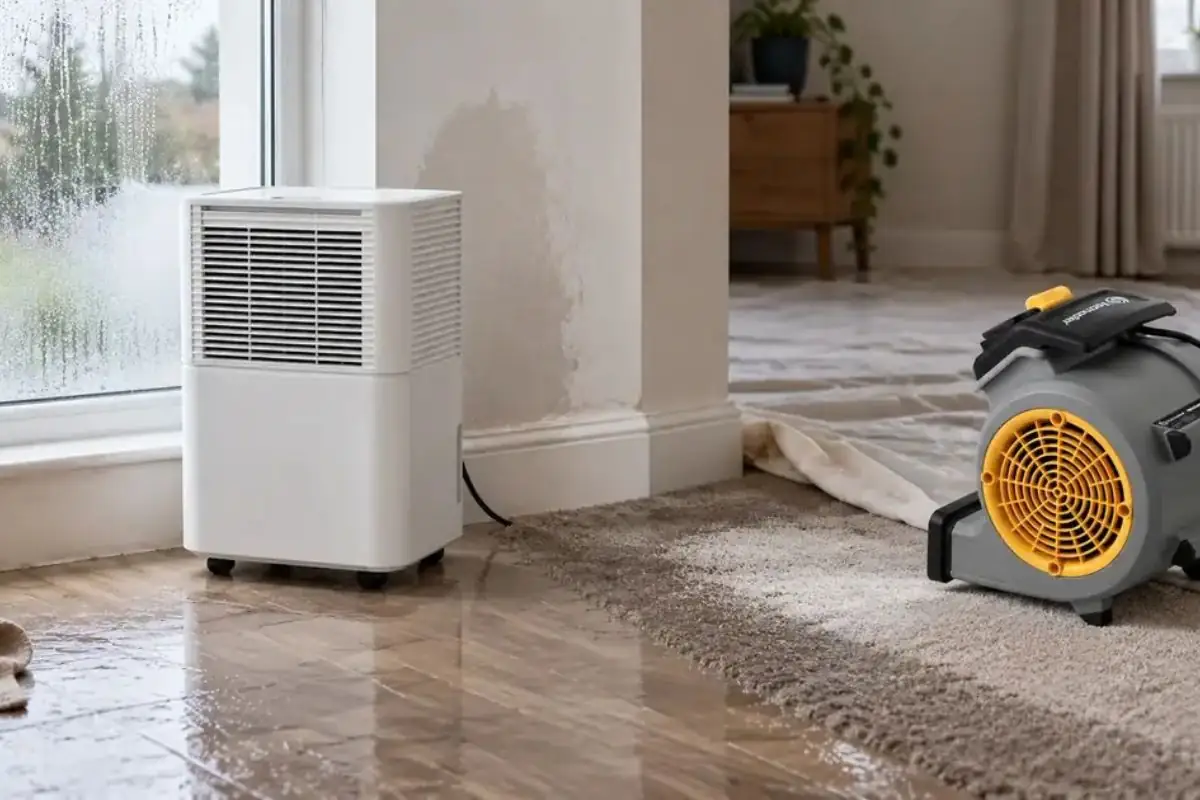
You may not know the term for what you need. You only know a ceiling is bulging, the carpet squishes or the basement smells damp a day after the rain. What you are describing is water damage, and the fix is drying and cleanup done fast enough to save the materials. That work is called water damage restoration.
How Water Damage Restoration Works in Frederick
Water damage restoration in Frederick covers the steps after the leak is stopped. The crew removes standing water, pulls out materials that cannot be saved, dries what can be kept and confirms the structure is dry before anything is rebuilt. A plumber fixes the pipe. A restoration crew fixes what the water did to the house.
That split matters because the two jobs run on different clocks. A repaired pipe stops adding water, but wet framing and insulation keep holding it. This page is for the second job. If you still have an active leak, call about burst pipe repair first or at the same time, since the water has to stop before it can be removed.
The industry reference for this work is the ANSI/IICRC S500 standard for professional water damage restoration. It sets out how water is classified, how drying is planned and how results are verified. Citing the standard tells you what good work looks like. Ask any company how its process lines up with it.
What to Do While You Wait for the Crew
These steps protect the house and your claim. Skip any that are not safe.
- Make sure the source is stopped. Close the main valve if a supply line is still running.
- Stay out of rooms with ceiling sag or standing water near outlets until power to that area is off.
- Lift area rugs, books and furniture legs off wet floors. Place foil or wood blocks under furniture feet.
- Open windows and run fans if the weather allows, but do not use a household vacuum on water.
- Photograph and video every wet area, the source and any damaged belongings before moving things.
- Do not throw away damaged items until your insurer has seen them or approved disposal.
When you call, say where the water came from and how long it has been wet. Those two answers shape the plan.
Clean, Gray or Black Water: What Changes in the Plan
The S500 standard sorts water by how contaminated it is. The category decides what can be kept and what has to go.
| Category | Typical source | Health concern | Usual handling |
|---|---|---|---|
| Category 1, clean | Broken supply line, tub overflow, rainwater through a roof leak. | Low at first, but it worsens as the water sits. | Extract and dry. Most materials can be saved if the work starts quickly. |
| Category 2, gray | Dishwasher or washing machine discharge, toilet overflow with urine only. | Can cause illness if swallowed or touched. | Extract, clean and dry. Porous materials such as carpet pad are often removed. |
| Category 3, black | Sewage backup, river or creek floodwater, standing water for several days. | High, including bacteria and other pathogens. | Remove wet porous materials, disinfect and dry. Stay out until the area is cleared. |
Clean water becomes gray, and gray becomes black, if it sits long enough. Time is part of the classification.
Why Frederick Basements Get Wet Even After Flood Control
Frederick has a long record of high water. Carroll Creek's worst floods came in July 1868 and October 1976, when about 7 inches of rain fell on the city in under 16 hours. Tropical Storm Agnes on June 23, 1972 caused the largest flood the city has recorded on the Monocacy River. After 1976 the city buried Carroll Creek in concrete conduits, a project finished in 1993 that took about 130 acres of downtown out of the floodplain.
The conduits protect the streets, but they do nothing for a basement wall. The city's own flood information says about 11 percent of Frederick sits in or near the 100-year floodplain, and storms still soak basements in town. Groundwater pushes through foundation cracks, sump pumps fail when the power drops, and sewer lines back up when storm flow overloads them.
The practical point is insurance. A standard homeowners policy covers sudden pipe failures but usually excludes flood, and damage from a drain or sewer backup is often left out unless an endorsement adds it. Flood coverage through the National Flood Insurance Program carries a 30-day waiting period, so it must be in place before the storm. Read your policy now, because the claim call is a poor time to learn what it says.
From First Call to a Dry House
Assess
A technician finds the source, checks the water category and maps wet areas with moisture meters and a thermal camera.
Extract
Pumps and wet vacuums take standing water out of the structure.
Remove and clean
Wet drywall, insulation and carpet pad that cannot dry in place are cut out and bagged. Surfaces are cleaned.
Dry
Air movers and dehumidifiers run in sealed rooms. Readings are taken daily until materials reach their normal moisture level.
Verify
Final readings are recorded so the house can be closed up and rebuilt on dry material.
Water Standing in the House?
Call the restoration line. Tell the dispatcher where the water came from and how long it has been there.
Why the First Two Days Matter
The EPA advises drying wet materials within 24 to 48 hours to prevent mold growth. Past that window, the work changes.
Musty smell
A damp odor in a closed room means moisture is still trapped in walls, flooring or insulation.
Paint bubbling or peeling
Moisture behind a painted wall pushes the finish off. It points to a wall cavity that is still wet.
Warped or cupped floors
Hardwood and laminate swell along the edges when moisture gets under the boards.
Dark spots on drywall or ceilings
Spots after water exposure may be mold. Do not scrub them dry, since that releases spores.
Plumber or Restoration Crew? Both May Be Needed
A plumber handles
- Finding and repairing the burst or leaking pipe.
- Clearing a sewer line that backed up.
- Repairing a failed sump pump or water heater.
- Pressure testing before the walls are closed.
Restoration handles
- Removing standing water from the structure.
- Drying walls, floors and framing.
- Cleaning and disinfecting affected areas.
- Documenting moisture readings for an insurer.
If the problem is an active plumbing leak, start with burst pipe repair service. Restoration begins once the water has stopped.
What Sets the Cost of Water Damage Restoration
No two losses are the same, so a flat price over the phone would be a guess. These factors decide the final number.
How the Claim Usually Works
Call your insurer early, photograph everything and keep the damaged items until the adjuster approves disposal. Ask for itemized moisture logs and invoices, since adjusters rely on them. A sudden pipe burst is often covered, while long-term seepage and flooding often are not.
Water Damage Restoration Near Carroll Creek and the Monocacy
Frederick sits between Carroll Creek, which was channeled through downtown as a flood-control project, and the Monocacy River to the south and east. Properties close to either waterway can see groundwater seep into basements after long rain, even when no pipe has failed.
Brick row buildings in the Historic District hold moisture inside masonry walls, so drying takes longer there than in a newer drywall house. Ask for readings, not guesses, in any wall that stays cool to the touch.
Water Damage Questions, Answered
Keep people and pets out from under it, move belongings aside and set out a bucket. A sagging ceiling can drop without warning. Then call the restoration line, because that water has already soaked the insulation and framing above it.
Yes, at any hour. Water keeps spreading into framing and flooring while you wait, so the restoration line does not close.
Many losses dry in about three to five days, but thick framing, hardwood and heavy saturation can take longer. Daily moisture readings, not a calendar, decide when drying is done.
Often yes for clean water in one area. Sewage and heavy mold call for separation or temporary relocation, and the first inspection settles which applies.
It depends on the cause. Sudden pipe bursts are commonly covered. Flood and long-term leaks usually are not without special coverage. Read your policy or ask your agent.
If water is still running, stop it and call a plumber. If it has stopped, call restoration. If you are not sure, call this line and describe what you see.
Yes. The four Frederick ZIPs, 21701 to 21704, are the core, and crews also work in Thurmont (21788), New Market (21774), Middletown (21769), Walkersville (21793) and Urbana.
Every Hour Matters With Water
Call the restoration line now. It is answered 24/7.
Call (833) 521-1033