Repair or Replace a Water Heater: A Frederick Homeowner Guide
Replace it if the tank leaks, it is past 12 years or repairs add up. Repair it if the tank is sound and the failed part is cheap. Here is how to decide.
- Frederick-specific facts
- Steps you can take
- When to call a plumber
The Short Answer
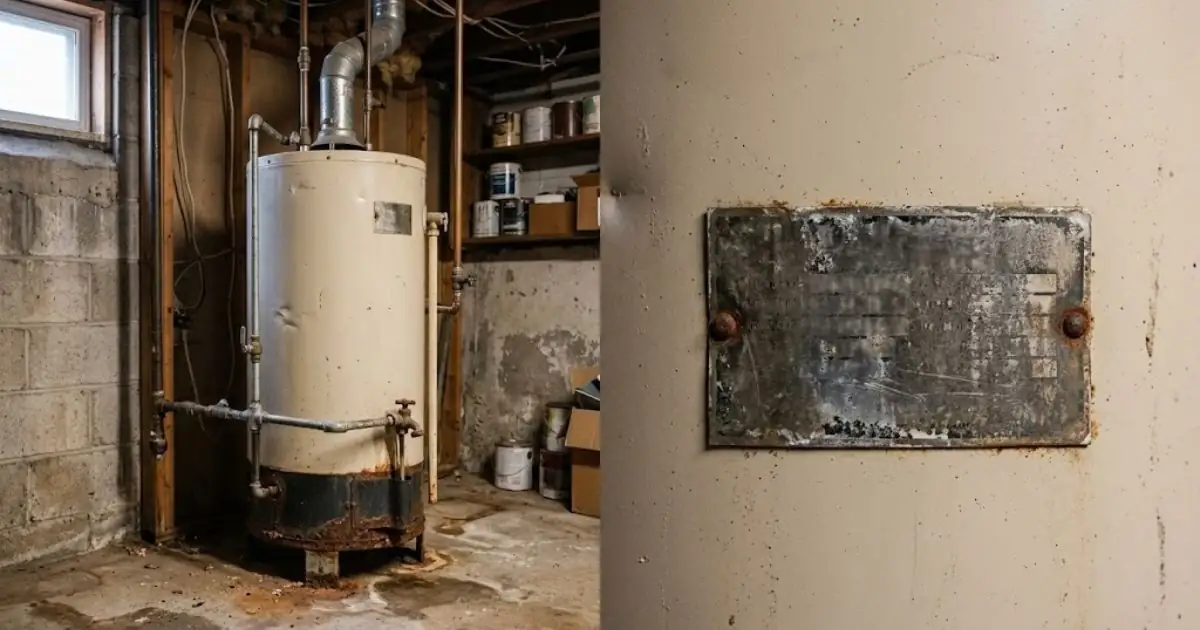
Repair a water heater when the tank is sound, the unit is under about ten years old and the failed part is small, such as an element, thermostat, igniter or valve. Replace it when the tank itself leaks, the unit is past twelve years or a repair would cost more than half the price of a new heater. A leak from the tank shell always means replacement, because a rusted tank cannot be patched.
The age is on the data plate. The first four digits of the serial number often encode the month and year, so a number starting with 0814 can mean August 2014.
Symptom, Age and What Usually Makes Sense
| Situation | Age | Usually best | Why |
|---|---|---|---|
| No hot water, tank dry | Under 8 years. | Repair. | A heating part has likely failed. |
| No hot water, tank dry | Over 12 years. | Replace. | Other parts will follow. |
| Leak from a valve or fitting | Any. | Repair. | A fitting is cheap to replace. |
| Leak from the tank body | Any. | Replace. | The shell is rusted through. |
| Rumbling and short hot water | Over 10 years. | Flush, then judge. | Heavy sediment may have ruined the tank. |
| Rust-colored hot water only | Over 10 years. | Replace. | The tank is corroding inside. |
What Frederick's Water Does to a Tank
City of Frederick water averages about 100 mg/L of hardness, roughly six grains per gallon. That is slightly hard, and over ten years it drops a layer of sediment on the bottom of a tank. In a gas heater, the sediment keeps heat from reaching the water, so the steel overheats and wears out sooner. In an electric heater, it buries the lower element.
Draining a few gallons from the tank once a year slows the buildup. A heater that has never been flushed often fails earlier than one that has. Homes on private wells, common outside the towns, may have harder water, and their heaters often fail sooner.
Newer homes in Urbana are now reaching the age when builder-grade tanks start to fail, so a planned replacement at year ten is wise.
Heater Leaking or Cold?
Call and give the age and the symptom.
A Fair Way to Weigh the Money
Reasons to repair
- The tank is sound and under ten years old.
- The part is cheap and available.
- You plan to move soon.
- The warranty covers parts.
Reasons to replace
- The tank leaks.
- Repairs have already been made once or twice.
- The unit is past twelve years.
- You want a different type, such as tankless.
Compare the repair price to half the price of a new heater. If repair costs more, replace.
What to Choose When You Replace
A like-for-like tank is the lowest cost and usually fastest. A tankless unit saves floor space and can last about twenty years, but needs a larger gas line and yearly descaling. A heat pump water heater uses much less electricity and needs room and a drain.
The details are on the pages for water heater installation and replacement service and water heater repair work. If the unit is a tankless heater, tankless service covers descaling.
Washington Gas serves many Frederick County households and Potomac Edison supplies most of the county's electricity, so your fuel choice depends on what is already at the house.
Five Checks That Help You Decide
- Read the age from the serial number on the data plate.
- Look for rust, moisture or a damp spot at the bottom of the tank.
- Check the temperature and pressure relief valve for drips.
- Ask when the tank was last flushed.
- Get a repair price and a replacement price, and compare them side by side.
What Drives the Price Either Way
Sudden Failures
A tank that bursts and floods the basement is often covered for the water damage but not for the heater itself. Photograph the unit and the damage.
How a Failing Tank Behaves Before It Lets Go
A tank usually gives clues for months. Hot water runs out sooner than it used to. The heater makes popping or rumbling sounds as sediment boils. Water from the hot tap has a rusty tint. A damp patch or rust streaks appear on the floor beside the tank.
The anode rod is a sacrificial metal rod inside the tank that corrodes so the steel does not. When it is used up, the tank lining attacks the steel. Replacing the rod at year five or six can add years of life, but only if the tank is still sound. After ten years, the money is better spent on a new heater.
Pay attention to the temperature and pressure relief valve. A valve that drips regularly may be reporting a pressure problem, not a bad valve. Test it only if the manual says how, and call a plumber if water keeps flowing from the discharge pipe.
A Realistic Plan for an Aging Heater
Year 5 to 7
Flush the tank, check the anode rod and test the relief valve.
Year 8 to 10
Start budgeting for a replacement. Note the model and the fuel.
Year 10 to 12
Choose a replacement before the old one fails, and compare tank and tankless.
After 12 years
Treat any leak or repeated repair as a signal to replace.
What the Code Requires on Any Water Heater
The International Plumbing Code (IPC), which Maryland follows, requires a temperature and pressure relief valve and a discharge pipe on a storage water heater. If your tank lacks one, or the discharge is capped, fix that regardless of the heater's age.
Water Heater Questions From Frederick Homeowners
Eight to fifteen years, depending on type, water and care.
Many owners do. Turn off power or gas, attach a hose to the drain and run water out until it is clear.
Not always. A drain valve, a relief valve or a fitting above can drip down. A technician checks.
Popping or rumbling means sediment. A flush may help if the tank is sound.
Yes. The line is open 24/7.
Often within a day, depending on the unit and the access.