Clay Sewer Lateral and Root Problems in Older Frederick Streets
Older neighborhoods have clay laterals with many joints, and mature trees find them. Repeat clogs, gurgling and a lawn wet spot are the clues.
- Frederick-specific facts
- Steps you can take
- When to call a plumber
The Short Answer
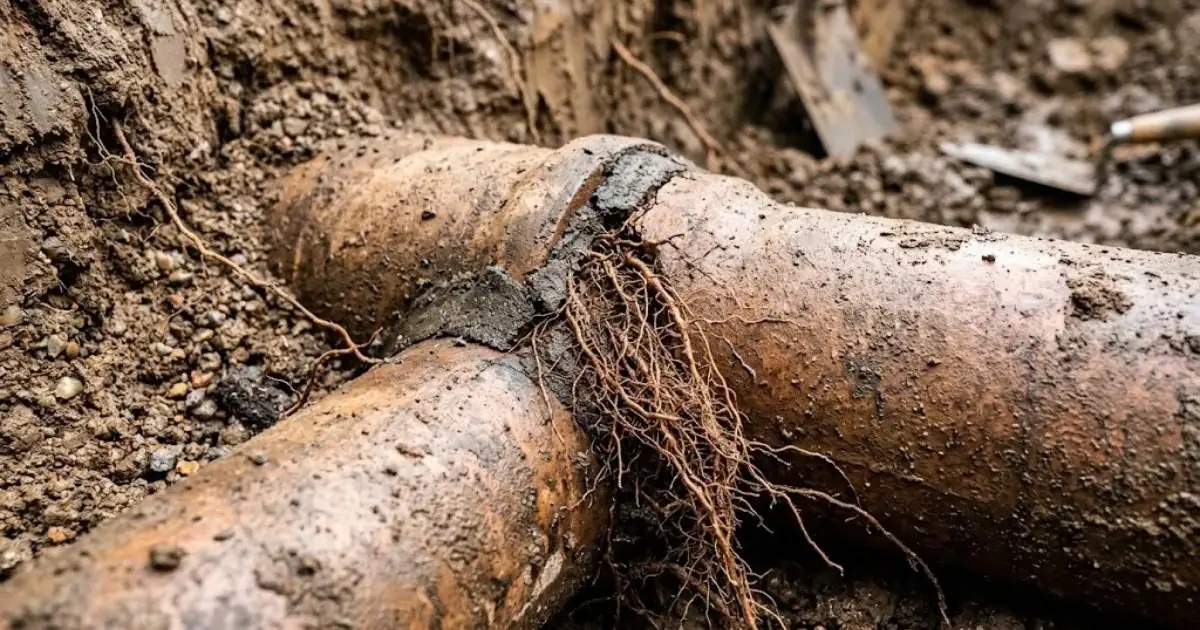
Tree roots enter clay sewer laterals through the joints between short pipe sections, grow into a mat and catch waste until the line clogs. In older Frederick streets, a clog that returns every few months usually means roots or a cracked section, not a bad fixture. A camera inspection shows the cause, and the fix ranges from jetting to lining to replacement.
Who pays depends on where the problem sits. A blockage on your side of the property-line cleanout is yours to clear, and the sewer utility handles the main in the street.
How a Root-Invaded Lateral Announces Itself
Clogs that come back
A drain cleared in spring is slow again by summer.
Gurgling toilets
Air is pushed back through a partial blockage.
Slow draining in the lowest fixtures
The basement floor drain and tub are the first to show trouble.
Wet, lush patch on the lawn
A cracked lateral can leak wastewater that feeds the grass.
Sewage smell outdoors
A break can release odor before any backup.
A very large tree near the line
Roots seek moisture, and a leaking joint offers it.
Why Clay Pipe and Mature Trees Do Not Mix
Many laterals in the downtown historic district and older neighborhoods are clay, laid in sections about two to three feet long. Every joint is a place where a root hair can enter. Roots only need a small opening and a steady source of water and nutrients, which a sewer provides.
Mature street trees add to the problem. Their roots spread well beyond the canopy, and a lateral that has run for seventy years under a large oak or maple is a likely target. Some homes from the 1940s into the early 1970s have Orangeburg, a fiber pipe that softens with age, and roots find it even more easily.
For the older streets of Middletown, the same pattern applies along the National Pike corridor, where the historic district sits on old laterals.
From Cleaning to Replacement
| Option | Best when | Limits |
|---|---|---|
| Cable cleaning | A first root clog in sound pipe. | Roots return in months. |
| Hydro jetting | Root growth and grease on pipe walls. | Not for broken or Orangeburg pipe. |
| Spot repair | One failed joint or crack. | Does not fix a failing line. |
| Pipe lining | Several cracked joints in a pipe that holds its shape. | Collapsed pipe cannot be lined. |
| Replacement | Collapsed, bellied or fiber pipe. | Most disruptive and costly. |
Clog Keeps Coming Back?
Call and ask for a camera look at the lateral before the next backup.
Responsibility, Permits and Digging Safely
Frederick County's utilities division sets its responsibility at the property-line cleanout or the easement, and the building sewer from the house to that point belongs to the owner. The City of Frederick runs its own sewer system, so ask which utility serves your address and where its line begins.
Digging needs care. Call 811 before excavating so buried lines are marked. Frederick County requires a plumbing permit for plumbing work and says only licensed master plumbers may install water or sewer lines from the main to the structure.
For the work itself, see emergency sewer line repair for methods, hydro jetting work for cleaning roots and grease, and drain cleaning for the first camera look.
Habits That Slow Root Growth
- Keep a cleanout at the property line accessible and uncovered.
- Run a camera on any lateral older than fifty years or that has clogged twice.
- Do not plant fast-growing trees within the root zone of the line.
- Avoid flushing wipes, which snag on roots and speed clogs.
- Keep records of every cleaning and inspection, and ask for the camera video.
What Happens During a Lateral Inspection
Find access
The technician locates a cleanout or pulls a fixture to get the camera into the line.
Run the camera
A flexible cable carries the camera from the house toward the street while a recorder captures the pipe.
Mark problems
A locator on the ground marks roots, cracks, offsets and bellies with depth and distance.
Review the video
You see the footage, hear the options and get a written quote for any repair.
What the Camera Shows and What It Means
Roots look like white or brown strands hanging into the pipe, sometimes forming a curtain. They are cut by jetting, but they return unless the entry point is repaired or lined. A crack shows as a dark line along the pipe wall, often with a small stain where water escapes.
An offset joint appears as a step where two sections no longer align, which catches waste and invites roots. A belly is a low spot where water pools, and it points to settled soil beneath the pipe. A belly cannot be fixed by cleaning, and it usually means the section must be replaced.
Ask for a copy of the video. It documents the pipe's condition for an insurer, a buyer or a second opinion, and it lets you compare quotes fairly.
What Shapes the Price of Lateral Work
Documenting the Lateral
Keep the camera video, the quote and the invoice together. If you later sell the house, a buyer's inspector may ask for them.
The Code Behind Sewer Cleanouts
The International Plumbing Code (IPC) expects building sewers to have accessible cleanouts, which is what lets a camera into the line without opening floors. If your lateral has none, adding one at the property line is a small job with a large payoff.
Sewer Lateral Questions From Frederick Homeowners
Root-killing foams can slow growth in some pipes, but they do not repair the opening. A camera shows whether they are worth trying.
Every five to ten years, or after two clogs.
Usually. It also shows roots, offsets and bellies.
If sewage backs up, yes. The line is open 24/7.
Usually not. A backup endorsement may cover cleanup but not the pipe itself.
Removing a tree helps long term but does not repair a damaged pipe, and roots left in the pipe keep growing.