Signs Your Galvanized Pipes Are Failing
Brown water after the house sits, weak pressure and repeat pinhole leaks are the classic signs. Here is how to check your pipes and what repiping involves.
- Frederick-specific facts
- Steps you can take
- When to call a plumber
The Short Answer
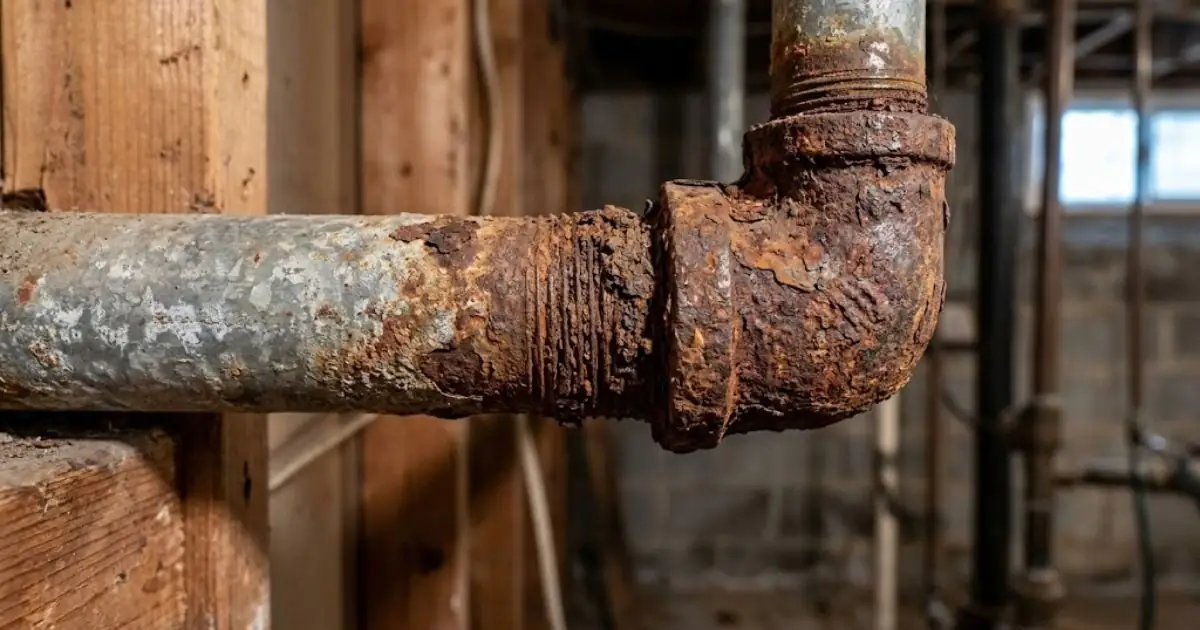
Galvanized steel pipe, coated in zinc, was the standard for water supply in American houses until roughly the 1960s. Over decades the coating wears away, the steel rusts from the inside and the pipe narrows. The main signs of failure are rust-colored water, falling pressure, pinhole leaks and flaking at fittings. A magnet that sticks to a pipe, and a dull gray surface, tell you it is galvanized steel.
A failing galvanized system rarely fails all at once. It leaks in one spot, gets patched and leaks in another, and the repairs add up. Planning a repipe is usually cheaper than a string of emergency repairs.
Six Signs of Failing Galvanized Pipe
Rust-colored water in the morning
Water that sat overnight picks up rust from the pipe wall.
Weak flow at every fixture
Mineral and rust buildup shrinks the opening, so a shower trickles.
Pressure that varies from tap to tap
Partial blockages affect some branches more than others.
Pinhole leaks and weeping joints
Rust eats through thin spots and threaded joints.
Stains or green corrosion at fittings
Where galvanized meets copper, the joint corrodes faster.
A metallic taste
Rust and dissolved metals change the flavor of the water.
How to Tell What Pipe You Have
Find a visible pipe
Look at the main supply near the meter or the water heater.
Try a magnet
A magnet sticks to steel and galvanized steel, not to copper or plastic.
Scratch lightly
Galvanized shows dull gray. Copper is orange and plastic is white, gray or blue.
Look at joints
Threaded, bulky fittings suggest galvanized or iron.
Which Frederick Houses Are Most Likely to Have It
The historic district and older neighborhoods near downtown, including homes built before about 1960, are the likeliest to still have galvanized supply lines somewhere. Many have been partly updated, so one bathroom may have copper while the kitchen branch is still galvanized.
The pipe from the meter to the house matters too. The City of Frederick has published an inventory of service line materials by address, listing lines as non-lead, lead, galvanized requiring replacement or unknown, and the city asked owners of pre-1973 houses to check. A galvanized service line that sat downstream of lead can hold lead particles, which is why those are flagged for replacement.
Homes in the older core of Middletown have the same mix. If you are unsure, a plumber can check the pipe at the main and report what runs where.
Galvanized Pipe Against Modern Choices
| Pipe | Typical life | Weak point | Notes |
|---|---|---|---|
| Galvanized steel | 40 to 60 years. | Rusts from inside. | Pressure loss and brown water. |
| Copper | 50 years or more. | Pinholes with acidic water. | Durable, higher cost. |
| PEX | Decades. | UV exposure, bad fittings. | Flexible, fewer joints. |
| CPVC | Decades. | Brittle with age. | Common in 1980s to 2000s homes. |
Pipes Looking Rusty?
Call and describe the water and the age of the house.
Patch It or Replace It?
A repair makes sense when
- One leak is in an otherwise sound line.
- The rest of the pipe flows well.
- Only a short section is galvanized.
- You plan to sell and need a short-term fix.
Repiping makes sense when
- Leaks keep appearing.
- Pressure is low at most fixtures.
- Water runs brown regularly.
- You are renovating and walls are open.
Repiping replaces the supply lines inside the house. See repiping for the process and cost factors.
What to Do After You Find Galvanized Pipe
Do not panic. Galvanized pipe that still flows well can serve for years. Start with a simple test: run a hot tap for a minute and look at the water. If it comes out brown, the pipe is shedding rust.
Look for leaks next. A leak detection work visit can find slow leaks in walls before they stain a ceiling. If the line from the meter is the problem, water line replacement covers it.
Tell your insurer about the pipe at renewal time, or when you buy. Some insurers surcharge or decline houses with older supply pipe, and a repipe record helps.
What Affects the Cost of Repiping
A Record for Buyers
Keep the permit, the inspection sign-off and photographs of the new pipe. A buyer or an insurer may ask for them.
What Happens Inside a Galvanized Pipe Over Fifty Years
A galvanized pipe starts life with a zinc coating that protects the steel. Water slowly dissolves the zinc, and once it is gone, the steel rusts. Rust is bulkier than the steel it replaces, so it builds up on the inside wall and narrows the opening. This is why pressure falls long before a pipe leaks.
Hot water lines fail first, because heat speeds corrosion. You may find that the hot side of a faucet runs weak while the cold side is fine. Threaded joints fail next, since the threading thins the pipe wall exactly where rust attacks.
Water chemistry changes the pace. Soft or slightly acidic water dissolves zinc faster, while very hard water can scale the inside of the pipe. A plumber can look at the cut end of a pipe and tell how much wall is left.
Questions to Ask Before You Approve a Repipe
- Which material will be used, and is it approved for drinking water?
- Will the plumber open the walls, or work through access holes, and who repairs the drywall?
- How long will the water be off each day?
- Who pulls the permit and schedules the inspection?
- What is the warranty on materials and labor, in writing?
Written answers to these protect you from surprises.
Galvanized Pipe Questions From Frederick Homeowners
Forty to sixty years is typical. Water chemistry changes that.
Not by itself, but it can hold lead particles if it sat downstream of lead, and rust affects water quality. A plumber can advise.
Yes, but mixing galvanized and copper can speed corrosion unless proper fittings are used.
A spraying leak is. Close the main and call. The line is open 24/7.
Yes. Frederick County asks for a plumbing permit for plumbing work.
Often. Corroded supply pipe is a common cause, though a failing regulator or the service line can also be responsible.