Hard Water in Frederick: City Supply vs Private Well
City of Frederick water is slightly hard at roughly 100 mg/L, while private wells vary widely and can be far harder. A test tells you which you have.
- Frederick-specific facts
- Steps you can take
- When to call a plumber
The Short Answer
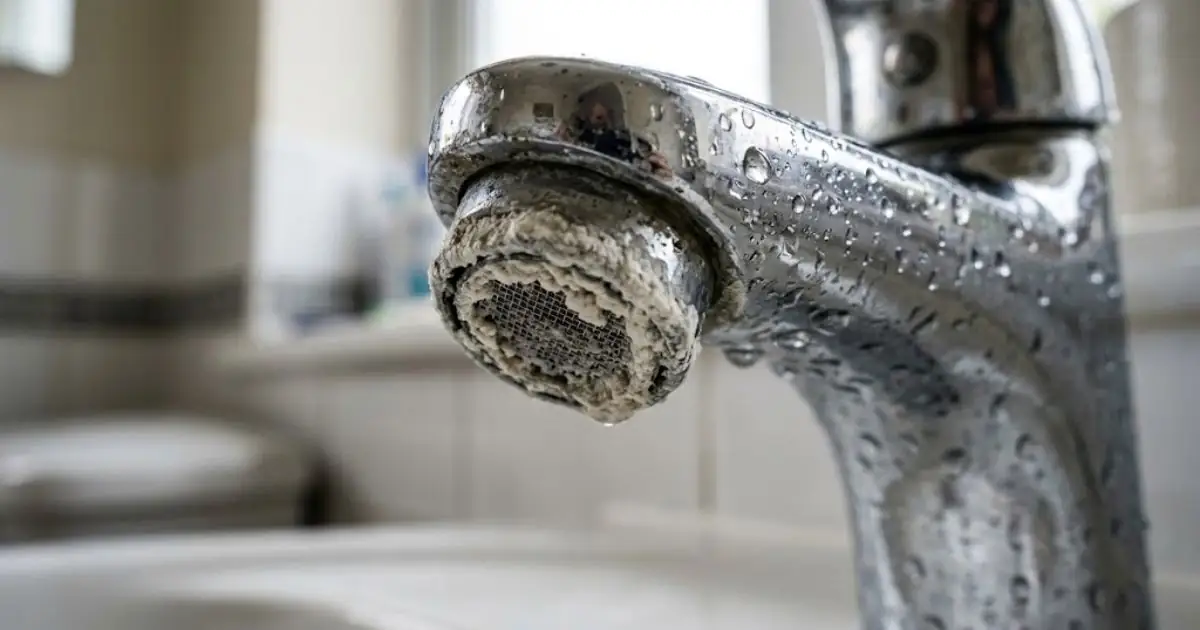
Published figures put the City of Frederick's water at about 99 to 101 mg/L of hardness, which is around six grains per gallon and counts as slightly hard on the USGS scale. That is enough to leave scale on fixtures over time but not enough to cause major trouble in most homes. Private wells are a different story, because hardness depends on the rock the water passes through.
Limestone and other carbonate rock, common in parts of the Frederick Valley, can produce much harder water. The only way to know what you have is to test. Hardness, iron, pH and bacteria are the usual tests for a well.
What Hardness Numbers Mean
| Hardness (mg/L) | Grains per gallon | Classification | What you notice |
|---|---|---|---|
| Under 60 | Under 3.5. | Soft. | Little to no scale. |
| 60 to 120 | 3.5 to 7. | Slightly hard. | Some spotting and scale over time. |
| 120 to 180 | 7 to 10.5. | Hard. | Visible scale, shorter heater life. |
| Over 180 | Over 10.5. | Very hard. | Heavy scale, fixture and appliance damage. |
These ranges follow the common USGS scale. Your own test result is what counts.
City Water, Town Wells and Private Wells
The City of Frederick treats surface water from the Monocacy River, Linganore Creek and Fishing Creek Reservoir, and it also receives Potomac River water from the county's New Design plant. Each source has different minerals, which is why a published average hides some variation by neighborhood.
Other towns have their own systems. Thurmont uses groundwater wells, and so does Walkersville, where state assessments say the wells draw from carbonate rock and Glade Creek recharges about a quarter of the pumped water. Groundwater from limestone tends to be harder than river water, so ask each town for its annual water quality report.
Outside the towns, many Frederick County homes have private wells. The county health department's Well and Septic Branch keeps records on wells, and the homeowner is responsible for water quality. In New Market and the rural roads around it, wells are common and testing every year or two is a good habit.
Want Your Water Tested?
Call and describe the scale, stains or taste. A test sizes the right fix.
How Hard Water Shows Up in the House
White crust on faucets and showerheads
Calcium and magnesium dry on surfaces.
Cloudy glasses and spotty dishes
Minerals leave a film.
Soap that will not lather
Hard water binds with soap.
A short-lived water heater
Scale on the tank bottom shortens its life.
Clogged aerators and low flow
Scale narrows small openings.
A tankless heater that needs frequent descaling
Scale builds on the heat exchanger.
A Softener, a Filter or Nothing?
A softener tends to help when
- Hardness is over about 120 mg/L.
- You have a tankless heater.
- Scale shows on fixtures and dishes.
- You want longer appliance life.
You may not need one when
- Hardness is near 100 mg/L and you see little scale.
- Your main concern is chlorine taste, which a filter fixes.
- You rent and cannot modify plumbing.
- You flush the water heater yearly and are satisfied.
Water softener installation and filtration solve different problems.
Steps to Take on City Water or a Well
On city water, start simple. Soak aerators and showerheads in vinegar, flush the water heater yearly and consider a softener only if scale really bothers you. A tankless heater is the main reason many owners decide to add one.
On a well, test first. Hardness, iron, pH, bacteria and nitrates each need a different answer. Iron needs a filter, acidic water needs a neutralizer and hardness needs a softener. If the pump or pressure tank also acts up, well pump repair service covers that side.
Maryland law says water conditioning equipment may be installed only by a licensed well driller, a water conditioner installer, a master plumber or a journeyman plumber, so ask who holds the license.
What Treatment Costs Depend On
Test Results Matter
Keep your test report. A buyer, lender or well inspector may ask for it, and it guides every treatment choice.
What Scale Does to Plumbing and Appliances Over Time
Scale forms when hard water heats up. Calcium carbonate comes out of solution and sticks to the nearest hot surface, which is the heating element, the burner end of a tank or the heat exchanger of a tankless unit. A quarter inch of scale can cut the efficiency of a heating element noticeably, because the metal cannot pass heat to the water.
Pipes suffer more slowly. Hot water lines gradually narrow, and fixtures with small openings, such as showerheads, aerators and valve cartridges, clog first. Dishwashers and washing machines collect scale inside, and you may see it as a white crust on the heating coil.
The practical effect is wear. A water heater in hard water can fail years sooner than the same model in soft water, and a tankless unit that is never descaled can shut down in two or three years. That is why even slightly hard water is worth managing with a yearly flush or a softener, and why the page on tankless water heater service work stresses annual descaling.
A Simple Way to Find Out Your Hardness
Ask for the report
City customers can read their utility's annual water quality report. Town systems publish their own.
Use a test strip
Hardware stores sell strips that give a rough reading in grains per gallon.
Send a sample
For wells, a state-certified lab gives exact numbers for hardness, iron, pH and bacteria.
Compare to your symptoms
Match the reading to scale, spotting and appliance wear.
Standards for Water Treatment Products
Look for treatment equipment certified to NSF/ANSI standards, such as 44 for softeners, and for connections that follow the International Plumbing Code (IPC), including an air gap on the softener drain. Certification marks are on the unit or in its manual.
Hard Water Questions From Frederick Homeowners
Slightly hard at around 100 mg/L. Wells outside the city may be harder.
It is not a health hazard. It affects fixtures, soap and appliances.
A state-certified lab can test hardness, iron, pH, bacteria and nitrates. A local plumber can collect or recommend a lab.
No. A softener removes hardness. A certified filter handles lead and chlorine.
Once a year in moderately hard water.
A licensed well driller, water conditioner installer, master plumber or journeyman plumber.