Sewage Ejector Pumps for Basement Bathrooms
A sewage ejector pump lifts wastewater from a basement bathroom up to the sewer line. It is not a sump pump, and it needs its own sealed basin, vent and permit.
- Frederick-specific facts
- Steps you can take
- When to call a plumber
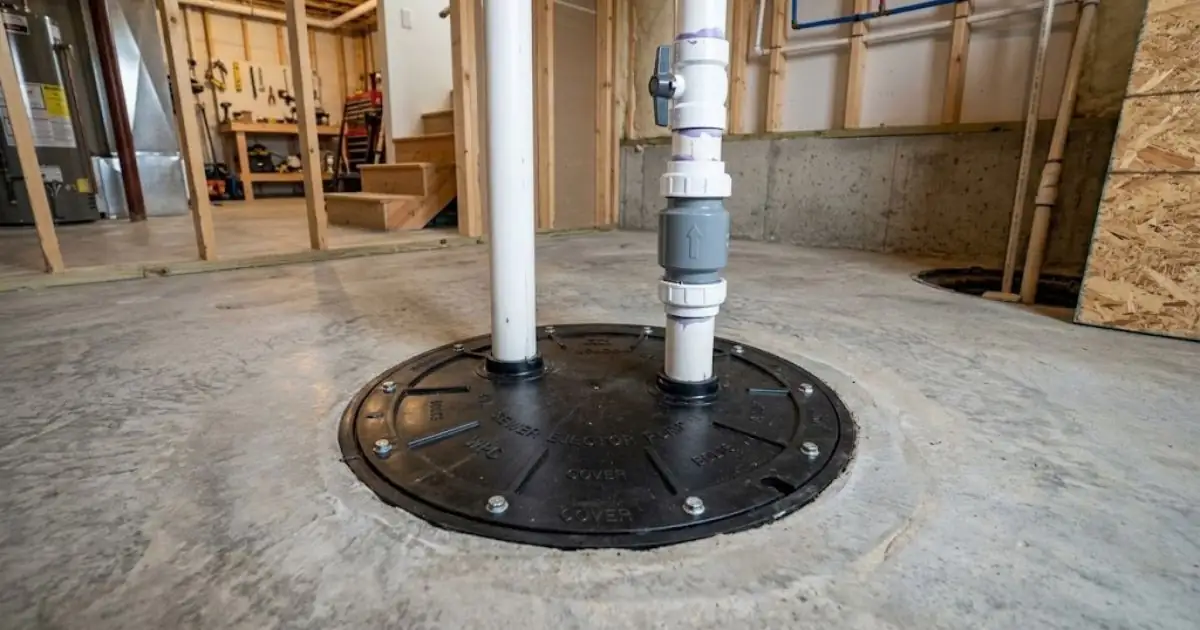
The Short Answer
A sewage ejector pump moves toilet waste, sink water and shower water from a bathroom that sits below the main sewer line up to the sewer. It sits in a sealed basin with a vent, and it is built to pass solids. A sump pump, by contrast, moves groundwater from a pit and is not built for sewage.
If your basement bathroom drains slowly, gurgles or smells, the ejector may be failing. A pump that fails with a full tank backs sewage onto the basement floor, so treat signs of trouble early.
Ejector Pump or Sump Pump?
| Feature | Sewage ejector pump | Sump pump |
|---|---|---|
| What it moves | Wastewater and solids from fixtures. | Groundwater and rainwater. |
| Basin | Sealed and vented to the roof. | Open pit with a lid. |
| Discharge | To the sewer line. | Outside, away from the foundation. |
| Failure risk | Sewage in the house. | Water in the basement. |
| Typical life | Seven to ten years. | Seven to ten years. |
Permits, Vents and Septic Homes in Frederick County
Frederick County requires a plumbing permit for plumbing work, and a new ejector basin is plumbing work. Maryland follows the International Plumbing Code, which sets requirements for the sealed basin, the vent and the check valve in the discharge line. Ask your plumber who pulls the permit.
On a septic system, the pump has to move waste to a point where gravity carries it to the tank. The county's building permit guidance notes that a basement bathroom without a pump needs the house sewer pipe to leave higher than the highest point of the septic area. If it does not, a pump is the answer.
Houses in New Market and the rural roads outside town often combine a basement bathroom, a well and a septic tank, and the pump is the link that makes the bathroom possible.
Six Signs an Ejector Pump Is Failing
Slow draining in the basement bathroom
The basin is not emptying quickly.
Gurgling or bubbling in the toilet
Air is escaping through a blocked discharge.
A sewage smell in the basement
A cracked lid or failing seal can release gas.
The pump runs constantly
A stuck float or failed check valve keeps it cycling.
Alarm sounding
A high-water alarm shows the basin is full.
Water on the floor around the basin
A cracked basin or lid is leaking.
Basement Bathroom Backing Up?
Stop using the fixtures and call. Do not run water into a full basin.
Single Pump or Pump With Alarm and Backup?
A single pump is enough when
- Use is light, such as a guest bath.
- The basin is sized for the fixtures.
- Power is reliable.
- You test the pump twice a year.
Add an alarm or a second pump when
- The bath is used daily.
- The basement is finished.
- Storms often cause outages.
- A failure would damage valued space.
A high-water alarm costs little and gives you minutes to act before the basin overflows.
What to Do When the Basin Overflows
Stop using every fixture that drains to the basin. Turn off power to the pump if the area is wet and you can reach the breaker safely. Keep children and pets out and wear gloves and boots if you must enter.
Call for help. A plumber can pump out the basin, clear the discharge line and test or replace the pump. Emergency sewer backup repair explains the steps and the insurance issues, and the cleanup of sewage that reached the floor is a separate job.
Most homeowners policies exclude sewer backup without an endorsement, so check yours. The Maryland Insurance Administration says water and sewer backup coverage can be added and can also protect against a sump pump overflowing.
Keeping an Ejector Pump Healthy
- Flush only toilet paper and waste. Wipes and hygiene products clog the pump.
- Test the pump twice a year by running water until the float lifts.
- Make sure the vent is open and the basin lid is sealed.
- Replace a pump that is older than ten years before it fails.
- Keep the alarm powered and test it with the float.
What a Proper Ejector Installation Includes
A good installation starts with the basin. It must be sealed, sized for the number of fixtures and set on a stable base. The pump sits inside with its float free of the wall, and a union lets it be pulled for service.
The discharge line needs a check valve and a gate or ball valve so the pump can be isolated, and it rises to the sewer with a slope that carries solids. The basin vent runs to the outside, joining the house vent system as the code allows.
Wiring should be on its own circuit with the right protection. The work is plumbing and electrical together, and a sump pump is a different system that should not share the basin.
What an Ejector Pump Job Costs Depend On
Insurance
Ask your agent about water and sewer backup coverage and its limit before you finish a basement bathroom.
The Path From a Basement Toilet to the Sewer
Waste from the basement fixtures runs by gravity into a sealed basin set below the floor. A float rises as the basin fills, and at a set level it switches the pump on. The pump grinds or passes solids and pushes the wastewater up a discharge pipe, through a check valve, to the building sewer line above.
The check valve keeps waste from flowing back into the basin after the pump stops. The basin vent lets air in and out as the level changes and keeps sewer gas out of the room. If either part fails, you get slow drains, gurgling or smells.
The system is simple but unforgiving. A basin that overflows spills sewage onto the basement floor, which is why an alarm and a regular test are worth the small cost.
Code Items to Confirm With the Plumber
The International Plumbing Code (IPC) covers the sealed basin, its vent and the check valve on a sewage ejector. Ask your plumber to confirm each is in the quote and that the permit and inspection are included.
Ejector Pump Questions From Frederick Homeowners
No. Only a sewage ejector pump is built for solids.
Seven to ten years is common.
If the fixtures are below the sewer line, yes.
Yes. The line is open 24/7. Stop using the fixtures first.
A new basin is plumbing work, and Frederick County asks for a plumbing permit.
Check the basin lid and vent. A plumber should look at it promptly.