Sewer Backup: What to Document for Your Landlord or Insurer
Photograph the water and the damage before cleanup, keep the plumber's invoice and camera video, and notify your landlord or insurer quickly in writing.
- Frederick-specific facts
- Steps you can take
- When to call a plumber
The Short Answer
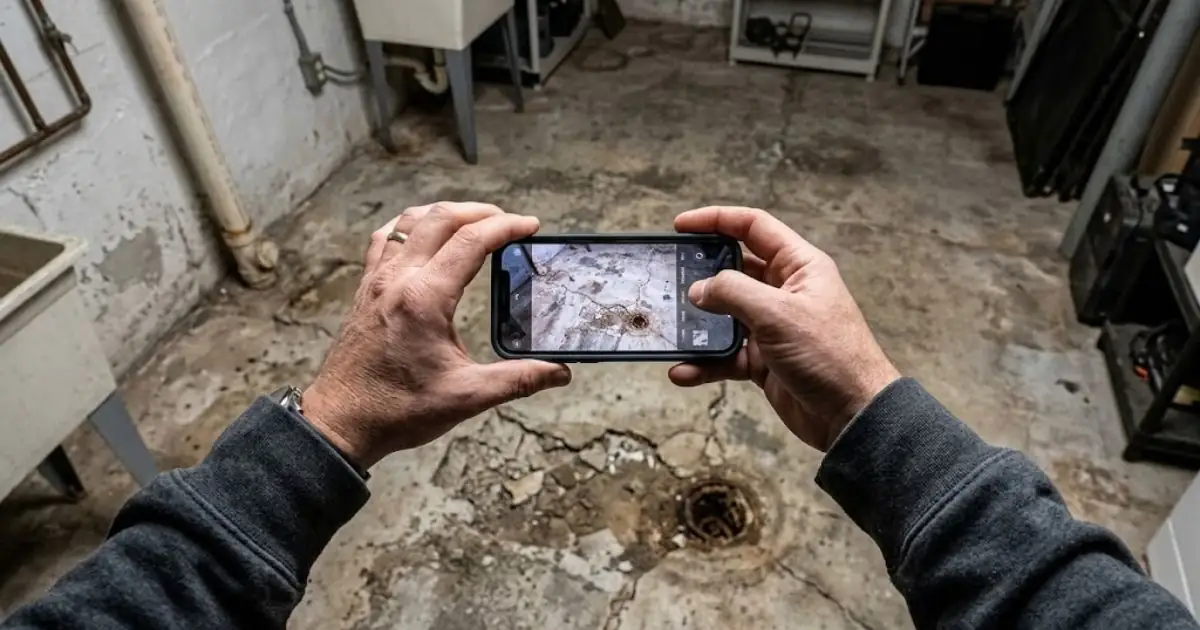
After a sewer backup, document before you clean. Take wide and close photographs of the water level, the affected rooms and every damaged item, and record video of the drain or fixture where the water came up. Keep the plumber's invoice and, if a camera was used, ask for a copy of the video, because it shows the cause.
Notify your landlord or insurer in writing and keep a copy. The date and time you reported are part of the record. Do not throw away damaged belongings until the insurer or landlord has approved disposal.
A Backup Documentation Checklist
- Photographs of each affected room from a doorway, then close-ups of damage.
- Video of the source drain, showing the water and any smell or color.
- A list of damaged items with brand, age and approximate value.
- The plumber's invoice, the date and time of arrival and the camera video if one was made.
- Copies of every message to the landlord or insurer, with dates.
Store copies in the cloud so you can find them if the phone is damaged.
What Maryland's Insurance Regulator Says
The Maryland Insurance Administration says water that backs up through sewers or drains, when it is not due to the insured's negligence, is typically not covered under a standard homeowners policy. Coverage can be added as a water and sewer backup endorsement, which the agency says also protects a home if a sump pump overflows. Flood, groundwater and seepage are separate exclusions.
For tenants, the landlord's policy covers the building, not your belongings. Renters insurance covers belongings, but it may also exclude backup unless you added the endorsement. Check both before you assume anything is covered.
In older neighborhoods like the historic core of Walkersville and Frederick, laterals are decades old, so backup claims are common. Ask the landlord who is responsible for the sewer line, since that decides who pays for the plumbing repair.
Who Usually Pays for What
| Item | Owner or landlord | Tenant | Notes |
|---|---|---|---|
| Clearing the sewer line | Usually the owner or landlord. | Not usually. | Depends on the lease and the cause. |
| Repairing a damaged lateral | Owner or landlord. | No. | Standard policies often exclude the pipe itself. |
| Cleanup and drying of the building | Owner's insurance if endorsed. | No. | Needs backup coverage. |
| Damaged belongings | No. | Renters policy if endorsed. | Check for backup coverage. |
| Temporary lodging | Policy dependent. | Policy dependent. | Ask the insurer. |
Sewage in the House Right Now?
Stop using water and call. Take photos before cleanup if it is safe.
Smart Moves and Mistakes After a Backup
Do
- Photograph everything first.
- Notify the landlord or insurer in writing.
- Keep damaged items until approved.
- Ask the plumber for a written cause.
Do not
- Clean up before documenting.
- Throw away belongings immediately.
- Run water to see if it clears.
- Skip the written notice.
A written report of the cause, ideally with camera video, is the strongest document in a claim.
Getting the Line Fixed and the Records Together
The first call is for sewer backup repair work, which clears the line and traces the cause. If the camera shows roots or a crack, sewer line repair follows. Ask for the camera video and a written statement of what was found and fixed.
Sewage that reached carpet or drywall needs cleanup by a restoration crew, which is the work of water damage restoration service and has its own phone line. Keep its invoices and moisture logs too.
Time matters for the claim and for health. Sewage is contaminated water, and wet porous materials should be removed quickly. Give the insurer and the landlord the same set of photographs, and keep the originals.
A Sensible Sequence After a Backup
Make it safe
Stop water use and keep people and pets out.
Document
Photograph and video before cleanup.
Clear the line
Call a plumber and get the cause in writing.
Notify
Write to the landlord or insurer with the date and cause.
Clean and dry
Hire cleanup once the insurer or landlord agrees.
What Affects the Cost of a Backup Response
Read Your Policy
Look for terms such as water backup, sewer and drain backup or sump overflow, and note the limit.
What to Say in a Written Notice to a Landlord or Insurer
A good notice is short and factual. State your name and address, the date and time you first noticed the backup, which fixtures were affected and what you did to stop it. Attach photographs and the plumber's invoice. Avoid guessing about the cause, since the camera or the plumber will establish it.
Ask for what you need in plain terms. Ask the landlord to confirm repair of the sewer line and arrange cleanup, and ask the insurer for a claim number and the next steps. Keep the tone calm. A clear record serves you better than an angry one.
Send the notice by email and by the method your lease or policy specifies, such as certified mail or a portal. Keep proof of sending, and follow up by phone with a note of whom you spoke to and when.
Health Cautions After Sewage Reaches a Home
Contaminated water
Backup water carries bacteria and should be treated as hazardous.
Porous materials
Carpet, padding and drywall that soaked up sewage are usually discarded.
Children and pets
Keep them out of affected rooms until the area is cleaned and cleared.
Food and dishes
Throw out food and clean dishes that were exposed.
Hand washing
Wash thoroughly after any contact and before eating.
Illness
Tell a doctor if anyone feels sick in the days afterward.
Sewer Backup Documentation Questions From Frederick Residents
Keep them until the insurer or landlord says they can be discarded, or photograph them well if health requires removal.
The lease and Maryland law decide. Put your request in writing and keep copies.
It is not always required, but it helps show cause and timing.
Call the plumber to stop the backup, then your landlord or insurer.
As soon as it is safe. Delays can affect a claim.
Yes. The line is open 24/7.