Sump Pump Stopped During a Heavy Rain: What to Do
Check the power, the float and the discharge line, get belongings off the floor and call a plumber if water keeps rising. This guide covers each step.
- Frederick-specific facts
- Steps you can take
- When to call a plumber
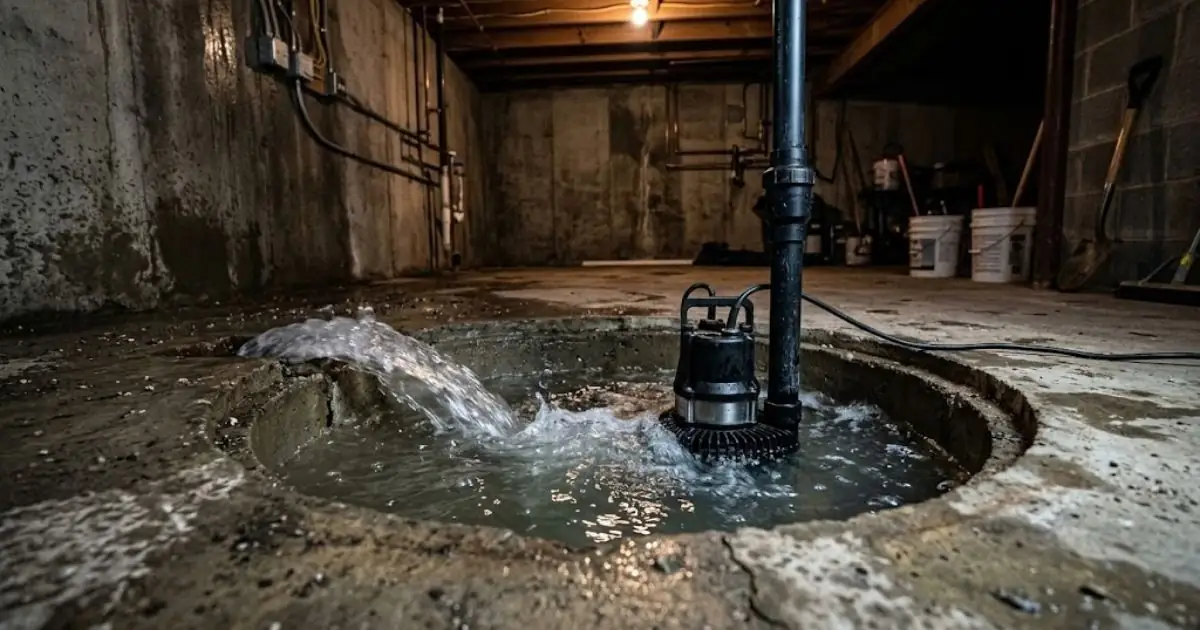
The Short Answer
If your sump pump stops while water is rising, start with power. Check that the pump is plugged in, that the breaker or GFCI outlet has not tripped and that the neighborhood power is on. Then lift the float by hand to see if the pump starts. If it runs, the float is stuck or tangled. If it does not, the motor or the switch has failed.
While you work, move stored items off the floor, keep clear of standing water near outlets and call for help early. A basement can take on inches of water in under an hour in a heavy storm.
Five Checks in Five Minutes
Power
Is the cord in the outlet and has the GFCI or breaker tripped? Reset once.
Float
Lift it by hand. If the pump starts, the float was stuck against the pit wall or its cord.
Discharge
Check outside for a frozen, kinked or buried discharge pipe.
Intake
Debris or gravel in the intake can jam the impeller.
Backup
If you have a battery backup, confirm it switched on and the battery is charged.
Why Frederick Basements Take on Water in Big Storms
Frederick's creeks, Carroll Creek, Linganore Creek and Hunting Creek further north among them, run fast after heavy rain, and groundwater presses on foundation walls long after the sky clears. The Monocacy River reaches flood stage at 15 feet on the city gauge, and at that level backwater reaches Carroll Creek. A basement that stays dry in an ordinary rain can fail in a storm that is stalled over the area.
Power is the other weak point. A storm that fills the pit often knocks out the electric supply too, and a sump pump with no power is a bucket. A battery backup or water-powered backup pump is the standard protection, and the Maryland Insurance Administration notes that water backup coverage, an add-on, can include a sump pump overflow.
What the Pump's Behavior Means
| What you see | Likely cause | First fix |
|---|---|---|
| Pump silent, pit full | No power, failed motor or stuck float. | Check breaker, lift float. |
| Pump hums, no water moves | Jammed impeller or failed check valve. | Unplug, clear the intake. |
| Pump runs and runs | Very high water table or stuck float. | Free the float, watch the level. |
| Water backs up from the discharge pipe | No check valve or a failed one. | Replace the check valve. |
| Pump cycles every few seconds | Check valve failure or small pit. | Replace valve, review pit size. |
Water Rising in the Pit?
Call now and say whether the pump has power.
What to Do While the Basement Fills
- Move boxes, electronics and furniture off the floor and onto shelves or upper floors.
- Do not wade into standing water if outlets or appliances may be live.
- Unplug a washer and dryer if they sit in the water.
- Use a wet vacuum or a bucket only if the area is safe, and do not run the washing machine.
- Photograph the water level and damage every hour for your insurer.
What to Do Once the Storm Passes
Get the pump looked at. A pump that failed once is old or undersized, and replacing it before the next storm costs less than another flood. Sump pump installation and repair service explains the options, including battery backup.
If the floor stayed wet more than a day, dry it. Emergency water mitigation starts the drying quickly, and a basement that floods regularly may also need a look at drain and waterproofing options.
Homes near Glade Creek in Walkersville have their own groundwater pattern, so ask about nearby creeks when you call.
Battery Backup or Water-Powered Backup?
A backup keeps the pit under control when the primary pump or the power fails. Two kinds are common.
Battery backup pump
- Works with or without city water.
- Needs a charged battery, replaced every few years.
- Runs for hours, depending on the battery and pit inflow.
- Includes an alarm on most models.
Water-powered backup
- Uses city water pressure, no battery.
- Does not work on a private well.
- Uses a lot of water while running.
- May need local approval, so ask the water utility.
Homes on private wells should look at battery systems, since a water-powered unit needs a public supply.
What a Good Sump System Includes
A pit sized for the inflow, a pump on a stable base, a check valve in the discharge line and a float that moves freely are the basics. The discharge line should run well away from the foundation and slope away, with a screened outlet to keep animals out. A line that ends near the wall just recirculates water back to the pit.
Add an alarm. A high-water alarm costs little and gives you minutes to act, which can be the difference between a damp floor and a ruined finished basement.
Maryland follows the International Plumbing Code, whose storm drainage provisions cover subsoil drains and sump systems, so a new pit and pump installation is plumbing work that needs a permit and an inspection.
What Pump Repair or Replacement Depends On
What to Photograph
Photograph the pit, the pump label, the discharge outlet and the water line on the wall. These records support a claim if you carry water backup coverage.
Sump Pump Questions From Frederick Homeowners
No. Connecting a sump pump to a sanitary sewer is prohibited in most places. Discharge outside, away from the foundation.
Seven to ten years is typical, less if the pump runs constantly.
If your basement is finished or storms often cut power, yes.
Often not, unless you bought water backup coverage. Groundwater and flood are common exclusions.
Yes. The emergency line is open 24/7.
Pour water into the pit until the float rises and watch the pump clear it. Do this each spring.